
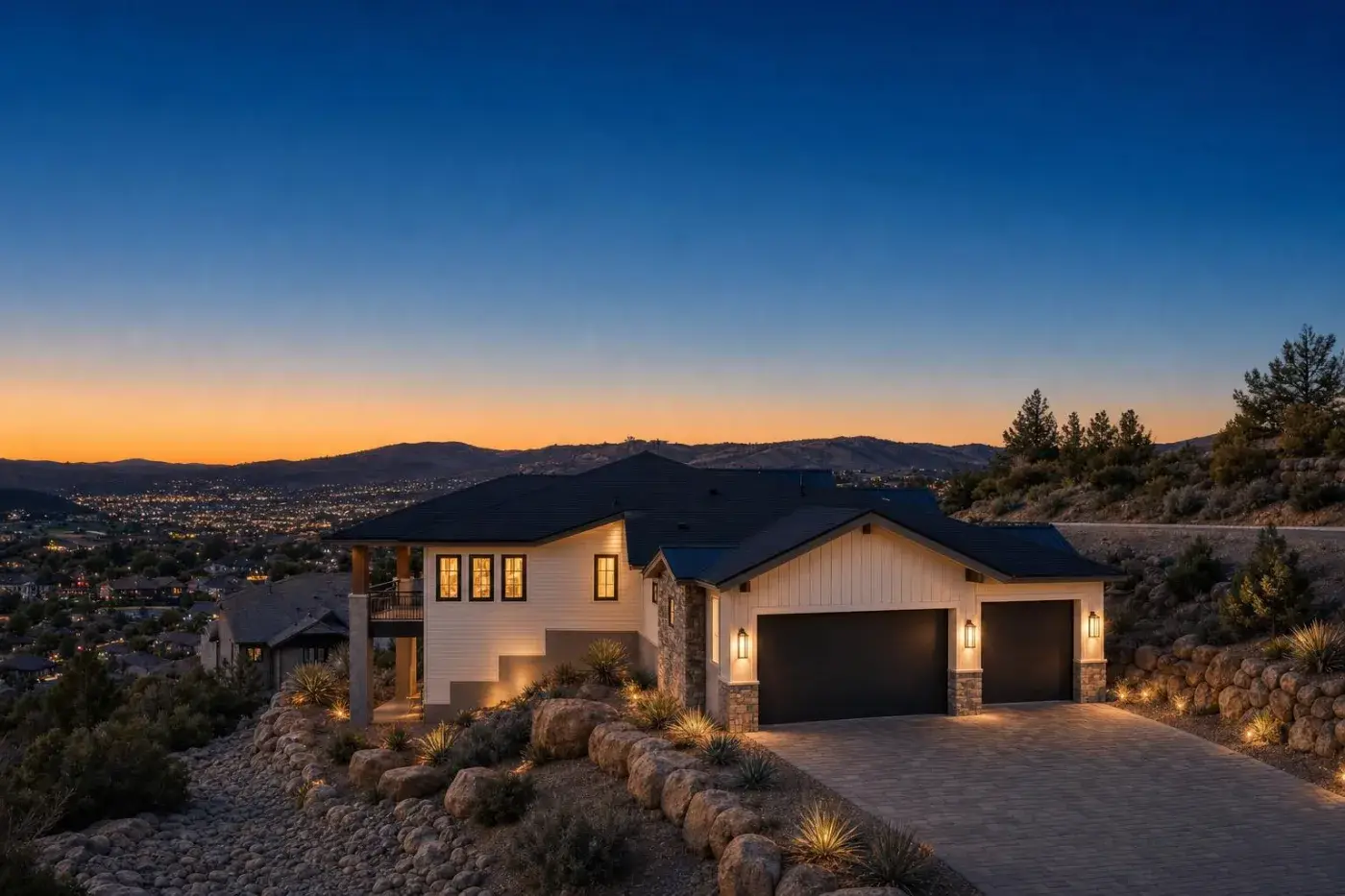
Building on a sloped lot in Prescott, AZ
You can build a beautiful home on a sloped Prescott lot, and many of the best views here depend on it. Slope and granite do affect the foundation, drainage, access and budget, so the key is to look at the site before the plans are final.
Updated November 2026
Why slope changes the job
On a flat lot, a foundation is mostly about the house. On a slope, the foundation is also holding back the hill. Footings step down the grade, stem walls get taller, and retaining walls may be needed. Water that used to run across the lot now runs toward your house unless it's sent somewhere else. Trucks, concrete and materials have a harder time reaching the work.
None of this is a reason to pass on a good lot. It's a reason to know what you're buying.
What we look at on a sloped lot
Rock
Much of the Prescott area is granite, and you often can't tell how much until you dig. Exposed boulders are a clue. If there's rock where footings or utilities need to go, excavation takes longer and costs more. On some lots, working with the rock looks better and costs less than removing it.
Drainage
Monsoon storms drop a lot of water fast. We look at where water enters and leaves the lot and plan grading, swales and drains so it moves around the house. Decks and retaining walls need the same attention.
Access
Can a concrete truck reach the site? Where will framing lumber land? How steep is the driveway in January? A driveway that works in summer can be a problem on icy mornings, so its grade and direction matter.
Soils and engineering
Depending on the site and the jurisdiction, you may need a soils report and an engineered foundation. It's better to plan for that from the start than find out at plan review. We'll tell you what we expect after walking the lot.
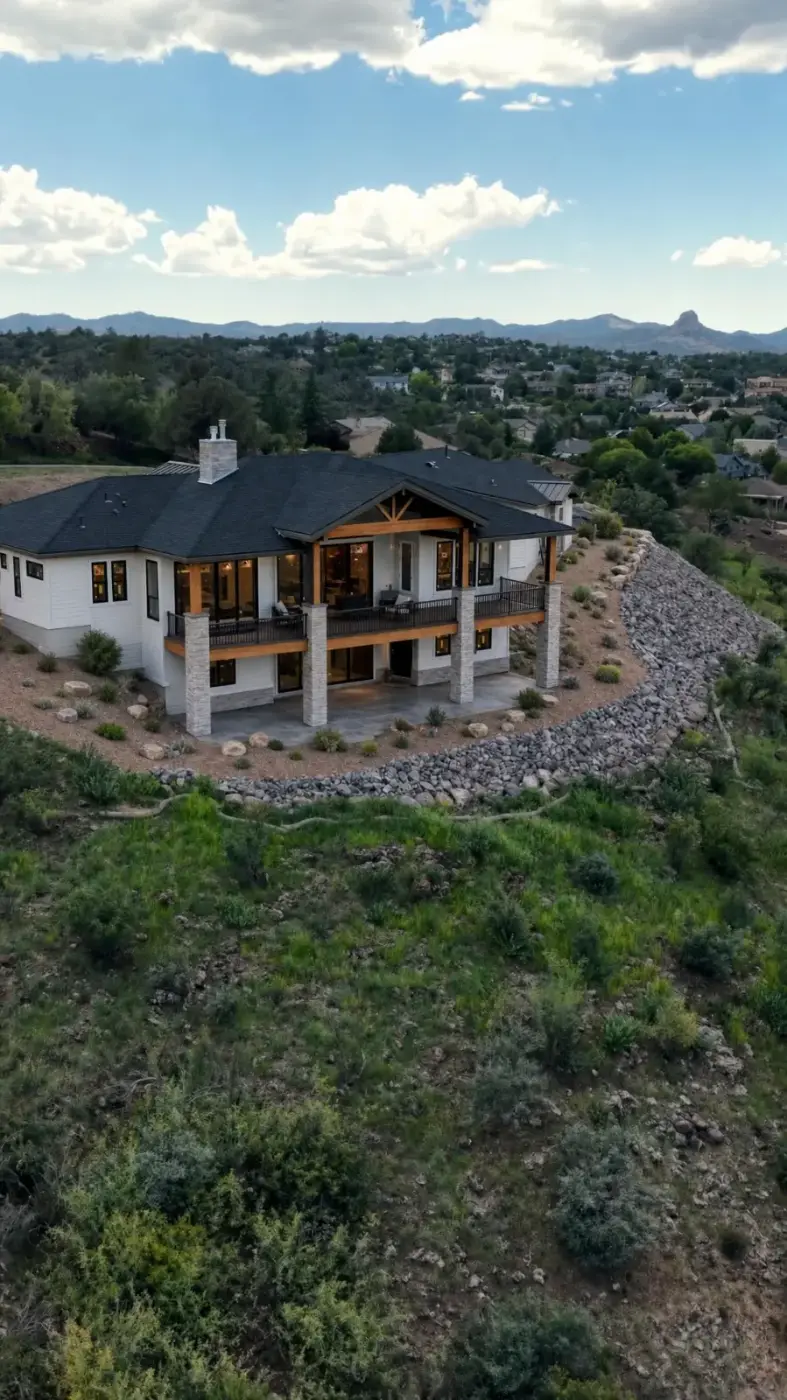
Designing for the slope
The best hillside homes use the grade instead of fighting it. A walk-out lower level adds living space with windows and its own door. Stepped floors can follow the land and reduce how much you have to cut. Placing the garage at the high side can make for a shorter driveway. A covered deck on the downhill side can turn a drop-off into the best room in the house.
A plan drawn for a flat lot rarely works well on a hillside. If you're buying stock plans, we'll help you and your designer adapt them before they're priced.
Fire and snow on hillsides
Slopes affect more than the foundation. Fire moves uphill quickly, so vegetation and materials near the house matter. Inside the City of Prescott, the Wildland-Urban Interface Code may apply. Snow load is site-specific in the city's design criteria, so roof design depends on your lot.
How slope affects the budget
Expect more in foundation, excavation, retaining and drainage than on a flat lot. How much more depends on the site. That's why the published per-square-foot ranges in our cost guide run so wide. We price your site as its own line items, so you can compare one lot against another with real numbers.
Before you buy
- Walk the lot with a builder before your contingency ends.
- Ask for any survey, topographic map or soils report.
- Read the CC&Rs for height limits, setbacks and rules on grading.
- Find out which office issues permits for that address.
Let's walk your lot
Tell us about your lot or your home and what you're picturing. Matt will reach out to set up a first meeting, on your property or over coffee.
- Call or text928.458.4848
- Emailmdutton@duttonconstructionaz.com
- HoursMon to Fri, 7 am to 5 pm. Saturday by appointment.
- ServingPrescott, Prescott Valley, Chino Valley, Dewey-Humboldt, Williamson Valley and Talking Rock
- GoogleDutton Custom Homes on Google Maps
- LicenseAZ ROC 337430
We'll get back to you within one business day. See our privacy policy.